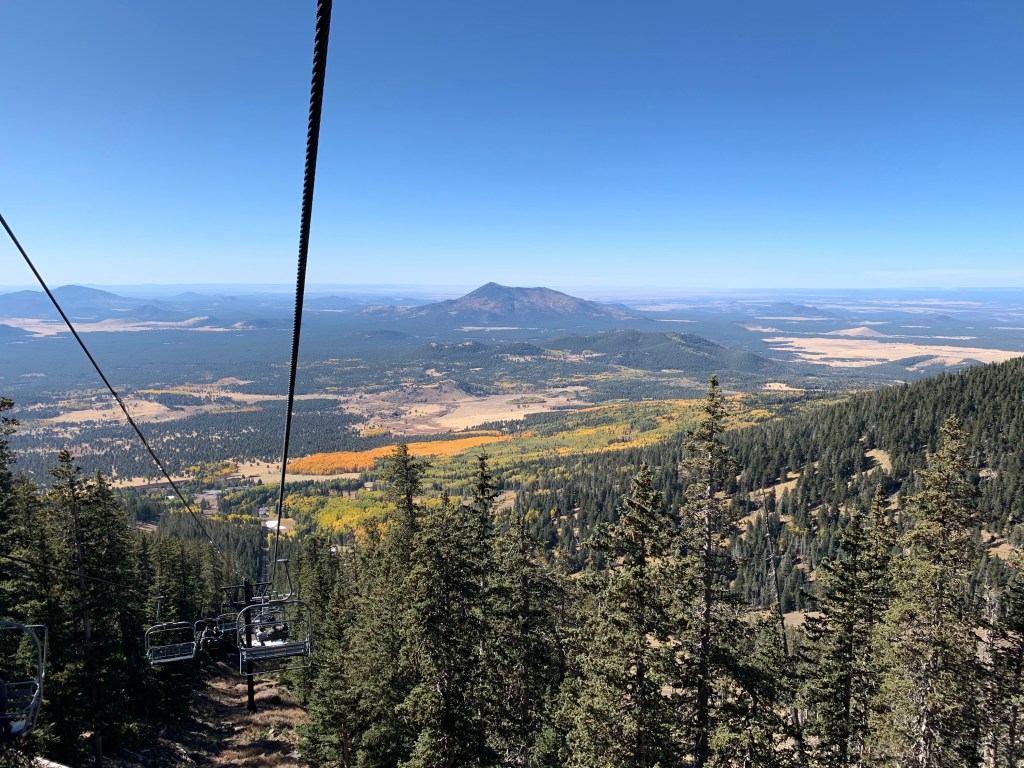
Landscapes have been on my mind a lot lately. Whether I’m in the mountains, in the city, at the art museum, or trying to sit in meditation, I’ve had lots of opportunity to consider all the different landscapes we inhabit.
In the fall, I attended a lecture by artist Myrna Harrison, who mostly paints landscapes, mostly what she sees “out her window” every day. When one spends a lot of time in a given landscape, it takes up residence in one’s being and can be called upon at any time, becoming an…
Internalized Landscape
This concept of internalized landscape set off an entire network of associations and ideas for me:
A physical landscape that we inhabit becomes a landscape that inhabits us:
Surely once a landscape lives within us, it becomes deeply entwined with memory … the sense of home place that we carry within us no matter where we find ourselves.
I grew up witnessing weather patterns build and dissolve along the front range of the Colorado Rockies, the rain coming down in great sheets, snow blanketing the peaks, the shifting colors thanks to the shifting light. The mountains, steady and immutable, were a grounding presence during those angst-y teen years. When I close my eyes, the view is preserved in my mind’s eye.
The speed at which we move through our environment affects our experience. There’s a big difference between sitting, walking, and driving. Life will throw at us hills and valleys, blind curves and passing zones. We have the free will to “take the wheel and steer”, eyes and heart open, noticing and learning from everything. Or like a backseat passenger, who has no interest in the rocks and trees blurring past the window, we can find a way to insulate ourselves from experiencing what is happening around us, most familiar within a comfortable cocoon.
The environment we live in becomes part of the creation of our internal landscape … and informs our relationship to the world at large:
The patterns and habits of mind, a kaleidoscopic tapestry of lessons, beliefs, feedback and training from the people we live with color the experiences we live through. Our minds have color and topography and weather. Moods can drift by like clouds on a breezy day, and they can build into giant thunderheads. Our beliefs may make us feel like we know the ground beneath our feet, yet at times, thoughts can be like shifting sand, and on occasion, quagmires. Where are the caves in our psyche, where darkness rules and we may fear to tread?
Our internal landscape includes the experience of inhabiting the body that carries us through life. My body has been through 2 pregnancies and cancer treatment; all of these life events have included surgeries. Also, as I enter “mid-life”, my body continues to shift in new and sometimes surprising ways. Thanks to yoga training, I have developed awareness of my body as another kind of inhabitable landscape; from this one there is no escape, only an ongoing (yet imperfect) effort to befriend and tend to it.
What is it like to move through the world in health, or in illness? Maybe it’s just the constant awareness of the problematic shoulder that is a constant barometer of “how I’m doing today.” Like the changing weather in one’s mind, no sensation in the body is ever really “solid” or permanent. The flow of energy, impulse or life blood gets dammed by injurious inflammations; maybe there’s the rearrangement of surgery, the devastation of disease. Yet our miraculous bodies are also capable of growth, regeneration and creation.
Our lives are lived in relationship to landscapes. The external landscape of the world we live in and the internal landscapes within our bodies and minds. Look at the alterations humans have made to the earth, there are correlations with our human forms; what we do to the earth, we do to ourselves.
What actions are necessary to restore health and balance to our outer and internal landscapes? Are we willing to do them?
 Vignettes From My Life